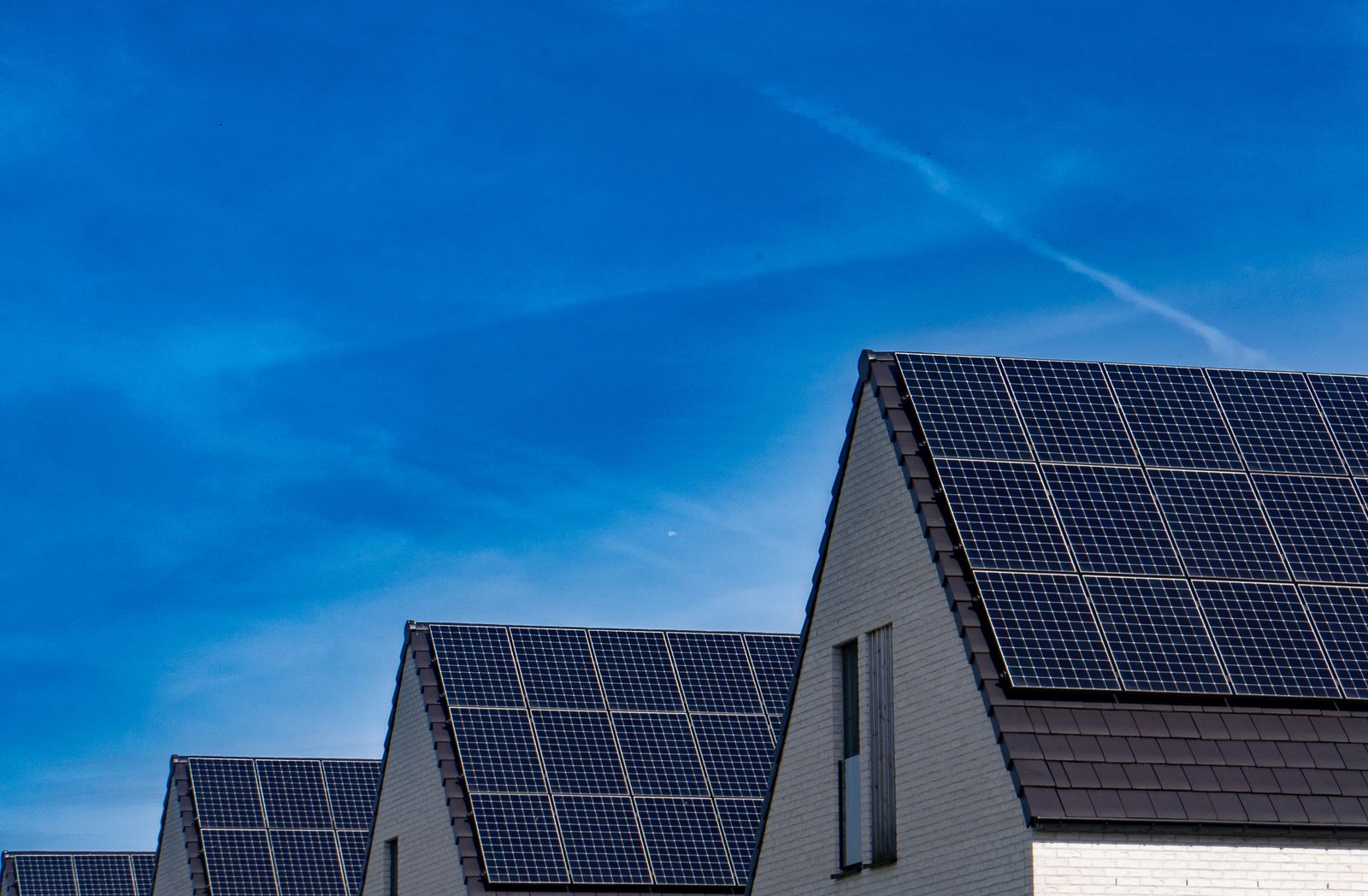
Solar panels in Scotland: frequently asked questions
This page brings together the questions Scottish homeowners ask us most about solar PV — whether panels work in Scottish weather, how batteries help, planning rules, 0% VAT, finance, the DNO connection and how to arrange a no-obligation quote through our MCS-certified partner.
Below are the questions we hear most often from homeowners considering solar panels in Scotland. If your question is not answered here, contact us and we will help directly.
Does solar work in Scotland?
Yes. Modern solar panels generate from daylight, not direct sunshine, so they produce useful electricity even on overcast days — and Scotland gets plenty of daylight. The long summer days from April to September deliver the bulk of annual generation, and cool panel temperatures actually improve efficiency. A properly sized and oriented system on a south, east or west-facing roof covers a meaningful share of a typical Scottish home's annual electricity use. Read our full does solar work in Scotland guide.
Do I need a battery?
A battery is not essential, but it lets you store surplus daytime generation for use in the evening and overnight, when your panels are not producing. Without a battery, surplus energy is exported to the grid. A battery also lets you take advantage of cheap overnight tariffs by charging when electricity is cheapest. The right battery size depends on your generation, your evening use and your tariff. See our battery storage guide.
Do I need planning permission for solar panels in Scotland?
Most domestic solar installations in Scotland fall under permitted development rights and do not need a planning application, provided size and placement limits are met. Exceptions include listed buildings, properties in conservation areas and some World Heritage Sites. If you live in a flat, different rules apply. See our solar planning permission Scotland guide for the general rules.
What about 0% VAT?
Until 31 March 2027, domestic solar panels and battery storage benefit from 0% VAT. A standalone battery added to an existing solar system also qualifies. The reduced rate is applied at the point of invoice by your installer — there is nothing separate to claim.
Is finance available?
Loans available, subject to status. Ask your surveyor for details when you request a quote. We never quote savings figures, payback periods or invented statistics — a proper quote sets out the system specification and price.
Who does the installation?
We arrange no-obligation surveys and quotes for paid installations. The installation itself is carried out by our MCS-certified partner. We install through MCS-certified partners so your system is properly accredited, warrantied and eligible for the relevant notification processes.
How long does installation take?
A typical domestic installation takes one to two days on-site, plus scaffold erection the day before. The survey and quote happen beforehand, and the DNO is notified afterwards. Your quote will give an indicative date window.
What is the DNO connection?
Every grid-connected solar system must be registered with your regional Distribution Network Operator. For a standard domestic system up to 3.68kW per phase, the installer notifies the DNO after installation under a connect-and-notify process. Larger systems need prior DNO approval. Your installer handles the paperwork. See our how it works guide.
Which roof orientations work?
South-facing is ideal in Scotland. East and west-facing roofs are still very workable, each producing roughly 80% of a south roof's annual output, and a split east/west array spreads generation across the day. North-facing roofs are generally not recommended. Shading from chimneys, dormers and trees can be managed with micro-inverters or optimisers — a proper survey includes a shading reading.
How do I get a quote?
Fill in the form on this page or on our get a quote page with your name, contact details, postcode and what you are interested in. We will arrange a no-obligation survey through our MCS-certified partner and send you a written quote with a full specification. No pressure to proceed.
Related guides
Frequently asked questions
Do solar panels work in Scotland?
Do I need planning permission for solar panels in Scotland?
Is there 0% VAT on solar panels and batteries?
Who installs the panels?
Is finance available?
How long does installation take?
Last updated: 17 October 2026