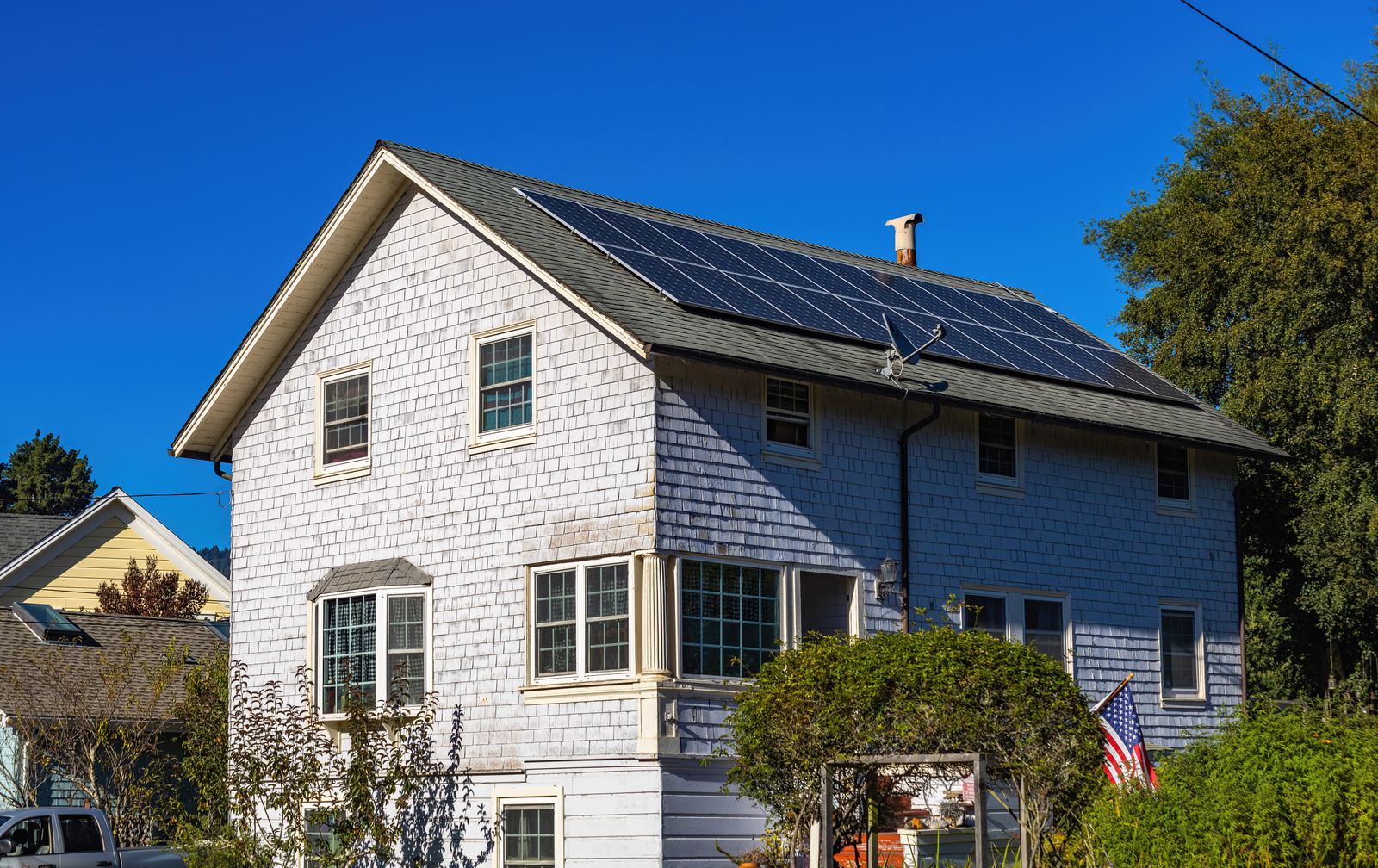
Solar panels in Stirling
Stirling and the Forth Valley sit at the geographic heart of Scotland and offer solid solar potential, with a mix of historic stone buildings, post-war housing and modern estates. This page covers local roof types, shading from the surrounding hills, permitted development, and how to arrange a no-obligation survey and quote.
Stirling is Scotland's historic "bridge to the Highlands" and sits at the heart of the country's central belt. Its position gives it a balanced climate — not as wet as the west, not as dry as the east — and a housing stock that ranges from medieval Old Town buildings to modern suburban estates. Solar works well here, with good generation from April to September and a battery helping through the darker months.
Roof types across Stirling
- Old Town and historic buildings — around Stirling Castle and the medieval town. Stone walls, slate roofs, heavily protected by conservation area and listed building status. Solar on visible roof slopes here is unlikely to be permitted; check with the council.
- Victorian and Edwardian villas — King's Park, Randolphfield, the Wynd. Slate roofs, generous proportions, often with space for a battery.
- Post-war housing — Raploch, Broomridge, St Ninians, Torbrex. Concrete tile and slate roofs, good access, straightforward installations.
- Modern estates — around Bridge of Allan, Dunblane corridor, Fallin, Throsk. New build roofs, easy access.
- Rural properties — across the Carse of Stirling, the Trossachs and the Forth Valley. Often large, unshaded roofs, though hills and trees can create local shading.
Shading and the surrounding hills
Stirling's position among hills — the Ochils to the north-east, the Campsies to the south-west — means some properties have reduced sun late and early in the day due to the horizon. This is usually a small effect, but for properties in the shadow of the castle rock or tucked into the foothills, a surveyor's shading reading is important. Mature trees in areas like King's Park and Bridge of Allan add seasonal shading.
Permitted development in Stirling
For a dwellinghouse in Stirling, most solar installations fall under permitted development and do not need a planning application, subject to the standard limits. Exceptions include listed buildings — Stirling has many in the Old Town and around the castle — and conservation areas, which cover the Old Town and parts of Bridge of Allan. The Loch Lomond and The Trossachs National Park begins to the west; if you live within the park, additional landscape considerations may apply. Check with Stirling Council.
The DNO connection in Stirling
Stirling's electricity distribution network is operated by SP Energy Networks. For a standard domestic system up to 3.68kW per phase, your installer notifies SP Energy Networks after installation under the connect-and-notify process. Larger systems need prior DNO approval.
Battery storage in Stirling
A battery is a sensible addition for Stirling homes, storing daytime surplus for evening use and allowing cheap overnight tariff charging in winter. The villas of King's Park and Bridge of Allan usually have space for a wall-mounted battery. See our battery storage guide.
0% VAT and finance
Until 31 March 2027, domestic solar panels and battery storage benefit from 0% VAT, including a standalone battery added to an existing system. Loans available, subject to status.
Arrange a Stirling solar survey
If you own a home in Stirling, Bridge of Allan, Dunblane or the surrounding Forth Valley and want a no-obligation quote, fill in the form below. We arrange a survey through our MCS-certified partner, who checks your roof, takes a shading reading and issues a written quote. No pressure to proceed.
Related guides
Frequently asked questions
Do solar panels work well in Stirling?
Who is the DNO for Stirling?
Do I need planning permission for solar panels in Stirling?
Is there 0% VAT on solar panels in Stirling?
Last updated: 17 October 2026